Losing a tooth does more than change your smile. It changes how you eat, how you speak, and, quietly, how you feel about yourself. Over time, it even changes the shape of your jaw. Most tooth replacement options address what you can see. Dental implants address everything underneath too, including the root, the bone, and the long-term health of your mouth.
What Are Dental Implants?
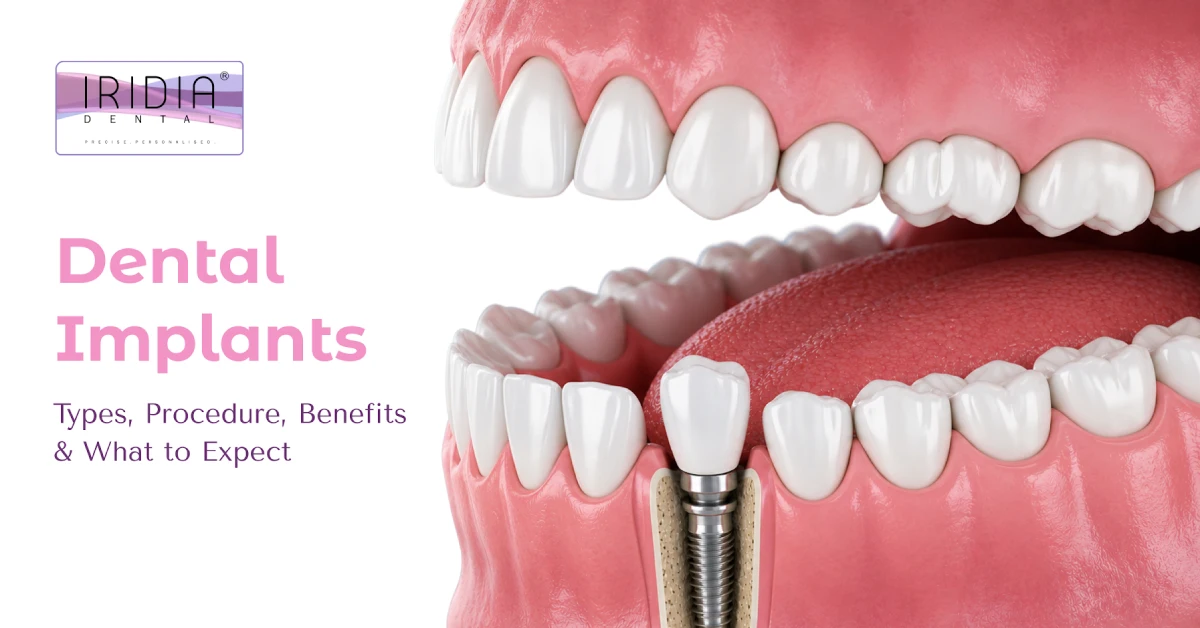
A dental implant is a small titanium structure that is surgically placed into the jawbone to act as an artificial tooth root by providing retention to the prosthesis that sits on top. Once it bonds with the bone, depending on the patient’s requirement, a crown, bridge, or denture is attached on top to restore the appearance and function of a natural tooth.
Titanium is the best choice and has been used for decades. It is highly biocompatible and hence our bodies rarely reject it. Over a period of months, the bone grows around the implant and holds it firmly in place. This bonding process is called osseointegration, and this is exactly why implants last so long and are able to mimic the natural tooth so efficiently.
Think of it this way: a conventional denture sits on top of the gum. An implant is anchored inside the jaw. That difference in structure is what separates it from every other tooth replacement option available. Once it becomes one with your jawbone, it acts almost exactly like a natural tooth.
Types of Dental Implants
Implants are classified based on location in the jawbone, material and the attached prosthetic type. The recommendation depends on how much bone is available and the exact location in the mouth where the tooth is being replaced.
Endosteal Implants
These are the most common types used today. A screw-shaped post is placed directly into the jawbone. Once healed, it supports a single crown, a bridge, or even a full set of teeth. Most patients with adequate bone density are good candidates for this type.
By restoration type, implants also include:
- Single implants for one missing tooth
- Implant-supported bridges for multiple adjacent missing teeth
- All-on-4 for full arch replacement when most or all teeth are missing
What Does the Dental Implant Procedure Actually Involve?
Many people delay considering implants because they are not sure what the procedure involves. Let’s understand that:
Step 1: Consultation and Imaging
Your dentist or oral surgeon needs a CBCT scan of your jawbone to assess bone volume, identify key anatomical structures in the area and plan the exact placement of the implant. This step is essential.
Step 2: Preparation Before Surgery
Some patients require additional minor surgeries, like bone grafting, before the implant can be placed. This adds time to the overall process but ensures there is enough bone to support the implant securely and provides better, longer-lasting results for the procedure.
Step 3: Implant-Placement Surgery
The implant is placed into the jawbone under local anaesthesia. It is a typically short and straightforward procedure. Most patients experience mild to moderate soreness for a few days after, which is easily managed with medication.
Step 4: Healing
This part usually takes the longest. The bone needs to grow around and fuse with the implant. This usually takes around three months and, in some cases, up to 6 months. During this time, a temporary restoration may be provided so you are not without a tooth.
Step 5: Final Crown Placement
Once the implant has fused to the bone successfully, a small piece called an ‘abutment’ is placed on top of it. A crown is then attached to match the colour, size, and shape of your natural teeth.
The full process, from consultation to final crown, takes a few months, depending on whether preparatory work is needed.
What Are the Benefits of Dental Implants?
The advantages of implants go well beyond appearance. Here is what the clinical evidence and decades of use show:
- They preserve the jawbone:When a tooth is lost, the jawbone beneath it begins to shrink over time due to lack of stimulation. An implant mimics the natural tooth root and continues to stimulate the bone, preventing the bone loss that occurs with dentures or bridges.
- They protect neighbouring teeth:A traditional bridge requires the adjacent teeth to be filed down to act as anchors. Implants stand completely independently, so the surrounding teeth are left completely untouched and healthy.
- They restore the tooth functions.Because the implant is anchored into the bone, it functions like a natural tooth. You can bite, chew, and speak without restriction or worry about movement.
- They are built to last:The titanium post is designed to be a permanent fixture. With proper care, it can last a lifetime. The crown on top typically needs replacing after 10 to 15 years due to normal wear.
- They support clear speech:Loose dentures can shift during speech and cause slurring or clicking sounds. Implants are fixed firmly in place, so they have no impact on how you speak.
- They improve confidence:Implants look and feel like natural teeth. There are no adhesives, no removal at night, and no significant visible difference from your surrounding teeth.
Final Thoughts
Dental implants are the most complete tooth replacement option available. They replace the root, support the bone, protect neighbouring teeth, and deliver results that last. The surgery is well-established, and results far outweigh the initial investment.
If you are considering implants, the first step is a consultation with a qualified implantologist who can assess your bone and medical history and provide you with the best options available.
At Iridia Dental, we combine in-house CBCT imaging with years of specialised experience to deliver implant outcomes that are built to last. Your scan is taken, reviewed, and planned entirely within our clinic, with the placement guide 3D printed from your imaging data to ensure precise, patient-specific positioning on the day of surgery. Whether you are replacing a single tooth or considering a full-arch solution, we will assess your bone, review your medical history, and walk you through every option available to you.
Book your implant consultation at Iridia Dental today and take the first step towards a complete, confident smile.
Frequently Asked Questions
The procedure is done under local anaesthesia, so you will not feel pain during surgery. Mild soreness and swelling for a few days after is normal and is managed with medication.
The titanium post can last a lifetime with proper care. The crown on top may need replacing after 10 to 15 years due to normal wear.
The surgery itself usually takes 1 to 2 hours per implant.
Once fully healed and the final crown is in place, eating with implants should feel completely natural. Most patients find they can eat foods they had to avoid with dentures or missing teeth, with no pain and no restrictions.
Implants can be made of titanium (most common), which is used in certain special cases.