

An ancient Ayurvedic ritual is trending all over social media, but what does oil pulling actually mean, and does it really work for your teeth?
You have probably seen it on your feed: someone swishes a spoonful of coconut oil around for 15 minutes, spits it out, and credits the ritual for their white teeth, glowing skin, and general wellbeing. Oil pulling has gone from an obscure Ayurvedic practice to a full-blown wellness trend.
But before you reach for a tablespoon of coconut oil, it is worth asking: what does the science actually say?
What Is Oil Pulling?
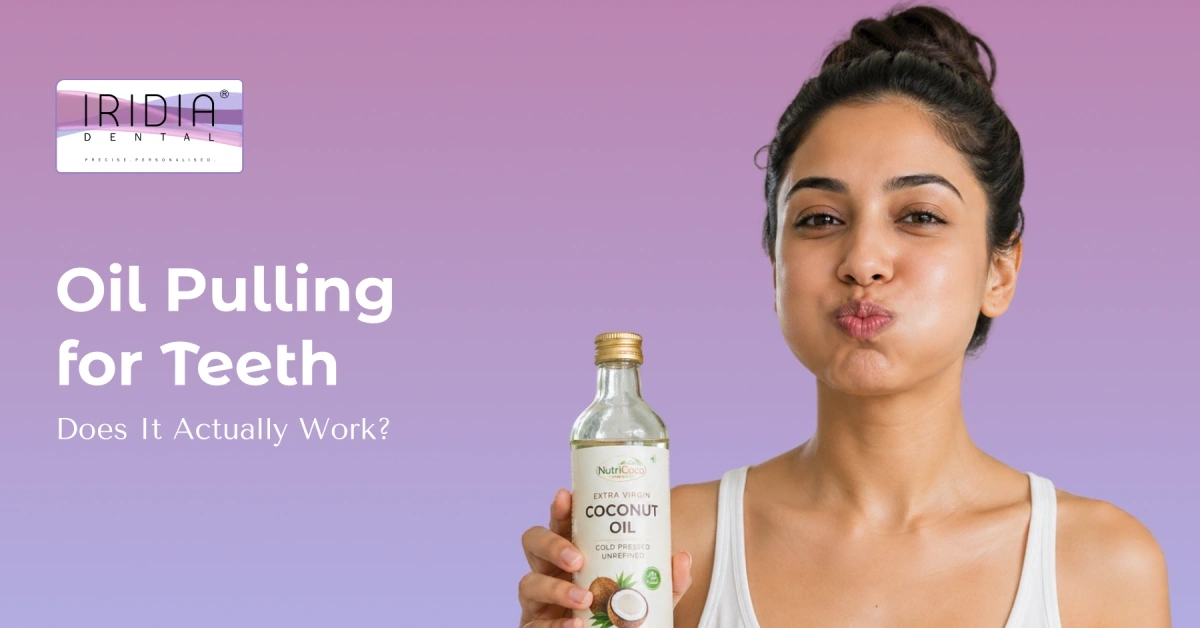
Oil pulling, known as Kavala Graha or Gandusha in Sanskrit, is a traditional Ayurvedic practice that originated in ancient India thousands of years ago. The basic idea is simple: swish an edible oil around your mouth for an extended period, then spit it out.
The name comes from the concept of “pulling” bacteria and toxins out of the mouth with the oil, cleansing it by drawing out impurities through swishing. Historically, it was considered a remedy not just for oral health but for dozens of systemic conditions, from headaches to digestive issues.
Commonly used oils today:
- Coconut oil
- Sesame oil
- Sunflower oil
- Olive oil
Coconut oil is by far the most popular choice, largely due to its mild taste and a specific compound we will get to shortly.
How Do You Do Oil Pulling for Teeth?
Here’s how oil pulling typically works:
- Take one tablespoon of your chosen oil first thing in the morning, before eating or drinking anything.
- Swish it gently around your mouth and pull it through your teeth for 15 to 20 minutes.
- Do not gargle or swallow the oil.
- Spit it out into a bin when done, not the drain, as oil can clog pipes.
- Rinse your mouth with warm water, then brush your teeth as normal.
You’ll notice the oil changes texture as you swish. It becomes thinner and milky white, mixing with your saliva and picking up debris from your mouth. That’s completely normal.
Does Oil Pulling Actually Work?
The short answer: Oil pulling for teeth shows some promise for oral hygiene, mainly around reducing bacteria in the mouth. Although, the science behind it is more measured than social media makes it out to be.
What studies say:
- Multiple studies found that oil pulling routines do reduce bacterial count in saliva.
- Lower bacteria matters because oral bacteria drive plaque, cavities, and gum disease.
- However, the same research found no significant improvement in gum health or plaque levels compared to people who don’t oil pull.
- The bacteria count drops, but whether that makes a visible difference is still up for debate.
Why coconut oil:
- Coconut oil contains lauric acid, a compound with proven antibacterial properties.
- It may coat the teeth and make it harder for bacteria to stick.
- This could potentially reduce plaque and staining from coffee or tea.
The catch:
- Oil pulling for teeth is not a replacement for your regular oral hygiene routine.
What Do Experts Really Think About Oil Pulling?
The American Dental Association (ADA) does not recommend oil pulling, citing insufficient scientific evidence to support it as a dental hygiene practice. Most studies that do exist are small, short in duration, or funded by companies with commercial interests in oil-pulling products.
Researchers at the British Dental Journal have also flagged that many of the more sweeping claims made online about oil pulling curing cancer, detoxifying the body, treating diabetes, or eliminating migraines have no credible evidence behind them whatsoever. The science simply does not support the more extraordinary claims circulating on social media.
What Are The Benefits and Limitations Of Oil Pulling?
Benefits:
- Reduces oral bacterial load.
- Supports fresher breath.
- Possibly reduces surface plaque mildly.
What oil pulling cannot do for your teeth:
- Meaningfully whiten your teeth.
- Cure cavities.
- Replace daily brushing and flossing.
It is a complement to your routine, not a substitute for it.
Oil pulling is a helpful add-on, not a replacement. Your toothbrush, floss, and regular dental visits are still doing the heavy lifting. If you’re due for a checkup, this is your reminder to book one.
The Bottom Line
Oil pulling is not the miracle cure social media makes it out to be, but it is not pure pseudoscience either. There is some legitimate evidence suggesting that it can reduce bacteria in the mouth and serve as a helpful addition to your existing oral hygiene routine.
Just don’t let it replace the basics. Brush twice a day, floss daily, see your dentist regularly, and consider a clinically proven mouthwash if you’re looking for an extra layer of protection. If you are curious about oil pulling, it is a low-risk practice worth exploring alongside your regular oral care routine.
Frequently Asked Questions
It can reduce oral bacteria and support fresher breath, but it is not a replacement for brushing and flossing.
Swish one tablespoon of oil for 15 to 20 minutes on an empty stomach, then spit it out and brush as normal.
Most dentists are skeptical because the existing scientific evidence is limited and the ADA does not recommend it.
It is time-consuming, can strain the jaw, and there is no strong evidence to support its more popular claims.
Coconut oil is the most popular choice due to its mild taste and natural antibacterial properties.