That daily coffee run? Totally worth it.
Somewhere between your first sip and your last, it’s probably been leaving a little something behind on your teeth.
Coffee isn’t the only culprit. That iron supplement you’re taking for anaemia, a glass of wine with dinner, or simply getting older can all play a part too. If you’ve noticed your smile isn’t quite as bright as it used to be, you’re far from alone. Stained teeth are one of the most common concerns patients bring to the dental chair. The good news is that most stains are completely treatable, and understanding what’s causing yours is the first step to getting your smile back.
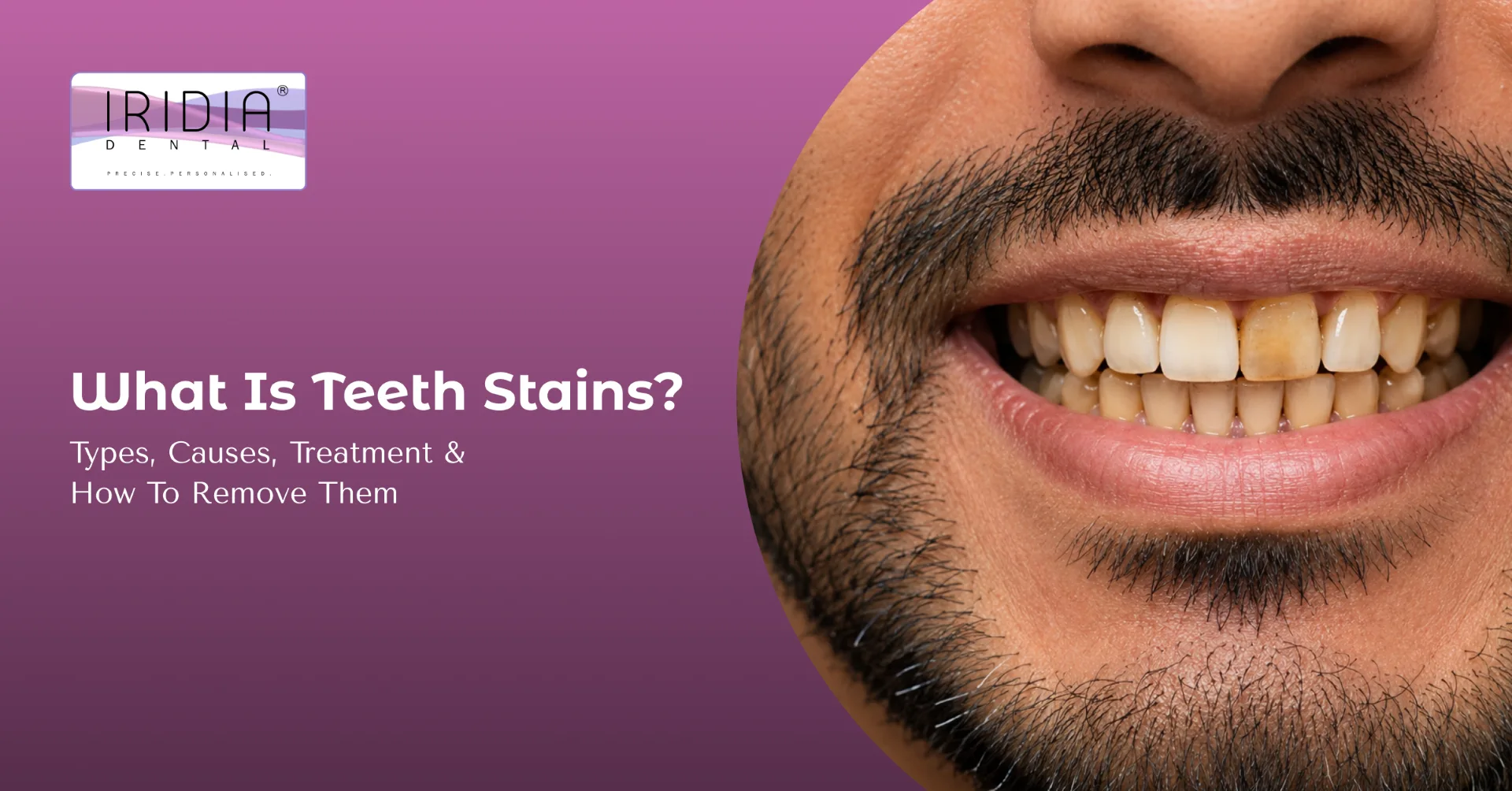
Depending on the cause, stains may appear as:
- Yellow teeth
- Brown or black spots
- White patches
- Grey or blue discoloration
A dentist can identify the type of stain and recommend the most effective treatment.
What Is Teeth Staining?
Teeth staining refers to any change in the natural colour of your teeth, ranging from yellow tinges to brown spots or grey discolouration. Stains can affect the outer surface of the tooth (enamel) or develop deeper within the tooth structure (dentin), and the treatment approach depends heavily on which layer is involved.
Types of Teeth Stains
Dentists generally classify stained teeth into three categories:
1. Extrinsic Stains
These occur on the outer enamel surface and are usually caused by external factors like food, drinks, or smoking. Extrinsic stains are typically the easiest to treat since they don’t involve the inner structure of the tooth.
Common causes include:
- Tea and coffee
- Red wine
- Tobacco use
- Smoking
- Colored soft drinks
- Poor oral hygiene
These stains are usually easier to remove through professional cleaning or teeth whitening.
2. Intrinsic Stains
Intrinsic stains develop within the tooth, affecting the dentin layer beneath the enamel. These are harder to remove with surface-level cleaning and often need professional whitening or restorative treatment.
Common causes include:
- Dental trauma
- Certain antibiotics (such as tetracycline)
- Excess fluoride during childhood
- Aging
- Root canal treatment
Professional cosmetic treatments such as veneers or internal bleaching may be required.
3. Age-Related Stains
As we age, enamel naturally wears thin, allowing the yellowish dentin underneath to show through more prominently. Age-related staining is often a combination of both extrinsic and intrinsic factors building up over the years.
Causes of Stained Teeth
Several everyday habits and health factors contribute to tooth discolouration:
- Food and drinks:
Coffee, tea, red wine, and dark sodas contain chromogens that cling to enamel - Tobacco use:
Smoking or chewing tobacco leaves stubborn brown and yellow stains - Poor oral hygiene:
Inadequate brushing and flossing allow plaque and tartar to build up and discolour teeth - Certain medications:
Tetracycline antibiotics taken during childhood can cause intrinsic grey or brown banding - Excess fluoride:
Overexposure during childhood tooth development can cause white or brown spots (fluorosis) - Trauma:
A knock to a tooth can damage internal blood vessels, leading to a single darkened tooth - Genetics:
Some people are simply born with naturally thinner or more yellow-toned enamel - Ageing:
Enamel wears down over time, exposing more of the yellow dentin beneath
Treatment Options for Stained Teeth
Treatment depends on whether the stain is extrinsic, intrinsic, or a mix of both. Common options include:
Professional Dental Cleaning
A routine scaling and polishing session at your dentist’s clinic can remove surface plaque, tartar, and many extrinsic stains, often restoring a noticeably brighter smile in a single visit.
In-Office Teeth Whitening
Professional whitening treatments use higher-concentration bleaching agents than over-the-counter products, often combined with light or laser activation for faster, more even results.
At-Home Whitening Kits
Dentist-prescribed take-home kits with custom trays allow for gradual, controlled whitening under professional guidance, making them a good option for those who prefer treatment on their own schedule.
Veneers or Bonding
For deep intrinsic stains that don’t respond to whitening, thin porcelain veneers or composite bonding can cover the discolouration entirely while also improving the shape and alignment of the tooth.
How to Prevent Teeth Stains From Coming Back
Once you’ve invested in a brighter smile, a few simple habits can help maintain it:
- Rinse your mouth with water after consuming coffee, tea, or wine
- Use a straw for staining beverages to minimise contact with your teeth
- Brush twice daily and floss regularly
- Schedule professional cleanings every six months
- Avoid tobacco products
The Bottom Line
Stained teeth are common and, in most cases, very treatable. The right fix depends on whether your stains sit on the surface or run deeper into the tooth, so a proper evaluation is always the best starting point. With the right combination of professional treatment and daily care, a brighter, more confident smile is well within reach.
Ready to Get Your Bright Smile Back?
Whether your stains are just surface-level or run a little deeper, Dr. Kulsum Husain and the team at Iridia Dental, best dental clinic in Lower Parel can help you find the right fix, from professional cleaning to whitening to veneers. Book a consultation today and take the first step towards a more confident smile.
Frequently Asked Questions
What does staining on teeth mean?
It means a change in your natural tooth colour, caused by surface build-up, internal changes, or a mix of both.
Can teeth staining go away?
Yes, most stains are treatable with professional cleaning, whitening, or in some cases veneers, depending on how deep the stain runs.
How do i remove staining from teeth?
Options range from professional cleaning and in-office whitening to at-home whitening kits, with veneers reserved for stains that don’t respond to whitening.
What does staining do to teeth?
It changes the colour of your enamel or dentin, but on its own, staining doesn’t damage the tooth’s structure or health.
Is teeth staining permanent?
Not usually. Extrinsic stains often lift with cleaning or whitening, while deeper intrinsic stains may need veneers or bonding for a lasting fix.