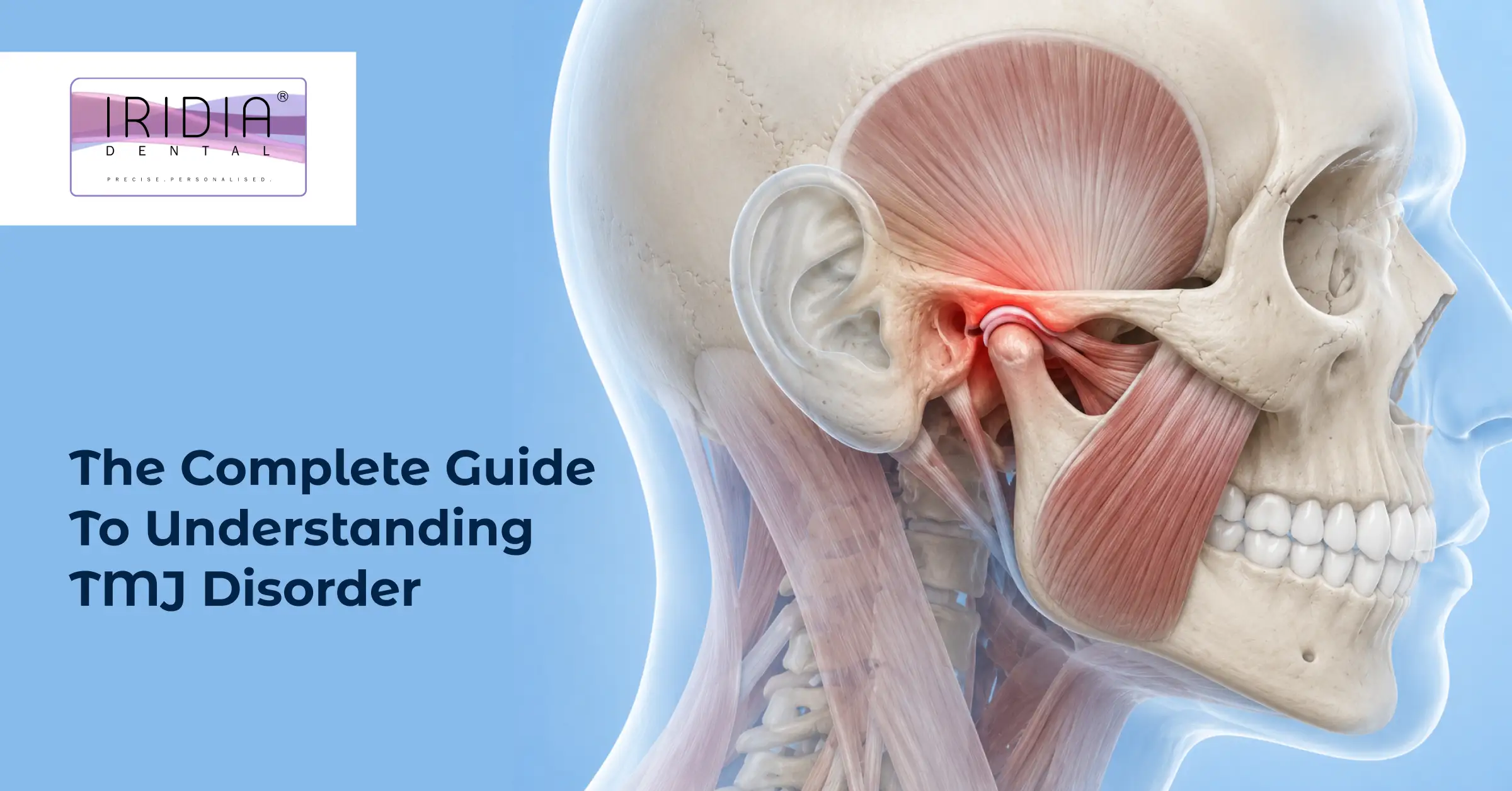
Try this right now: place your fingers just in front of your ears and open your mouth. That movement you feel is your TMJ, the complex hinge connecting your jaw to your skull that glides forward, backward, and side to side so you can talk, chew, and yawn smoothly.
While people often say they “have TMJ”, what is TMJ disorder exactly? TMJ disorder (medically known as TMD, or temporomandibular disorder) is a condition that occurs when this complex hinge stops working properly. When exploring what are TMJ disorders, doctors find these range from simple muscle fatigue to deep structural changes in the joint itself.
What Causes TMJ Disorder?
TMJ disorder is usually triggered by a combination of overlapping factors.
These include:
- Teeth Grinding or Clenching
- Chronic Stress
- Jaw Injuries or Strain
- Arthritis
- Gender and Age
- Poor Posture
- Repetitive Habits (like biting your nails or constantly chewing gum)
What Are the Symptoms of TMJ Disorder?
The jaw joint is closely connected to the nerves of the head and neck; TMJ disorder symptoms may often show up as:
- Persistent jaw or facial pain
- Audible clicking, popping, or grating sounds
- A restricted range of motion of the jaw
- Dull, aching headaches
- Ear pain, pressure, or a clogged feeling in the ears
- Constant ringing or buzzing in the ears, known as tinnitus.
- Chronic tension and pain in the neck and shoulders.
Patients often ask, “Is TMJ disorder serious?” While not life-threatening, leaving it untreated can lead to severe long-term complications like chronic jaw pain and limited joint mobility. Over time, these structural changes can severely impact your ability to eat, sleep, and speak comfortably.
Why an Accurate Diagnosis is Your Critical First Step
A precise medical evaluation is essential before starting any treatment for several key reasons:
- Mimics other conditions: TMJ pain is frequently mistaken for cavities, sinus infections, ear problems, or migraines.
- Prevents wrong treatments: Skipping a diagnosis can lead to unnecessary root canal treatments, antibiotics or ineffective medications.
- Targets the root cause: A formal evaluation ensures you treat the actual source of the pain rather than just masking the symptoms.
How Is TMJ Disorder Treated?
At Iridia Dental, we use advanced diagnostics and conservative therapies to restore your comfort. Clinical research shows 75% to 90% of individuals improve using non-surgical treatments alone (Herman, 2025). Surgery is rarely necessary.
Our focus is on minimal intervention and combining clinical care with daily habit adjustments.
Non-Surgical Treatments
- Resting the jaw, eating soft foods, and using heat or ice.
- Over-the-counter NSAIDs to reduce swelling and prescribed muscle relaxants or low-dose antidepressants to calm nerve pain.
- Custom oral appliances worn at night to stop teeth grinding and take pressure off the joint.
- Advanced digital tech to identify bite imbalances, allowing for precise micro-adjustments that relieve joint strain.
- Corticosteroids to quickly calm severe inflammation, and hyaluronic acid to lubricate a displaced joint disc.
- Laser therapy and dry needling to effectively treat deep, muscle-based pain.
Surgical Treatments
Used only as a last resort if a structural problem is confirmed and conservative options fail:
- Arthrocentesis: A minimally invasive saline washout to free a locked jaw.
- Arthroscopy: Uses a tiny camera through a small incision to clear scar tissue and make minor repairs.
- Arthrotomy: Open-joint surgery to reposition a displaced disc or reshape the bone.
- Total Joint Replacement: A final option to replace a severely destroyed joint with an artificial implant.
Is There a Cure for TMJ Disorder?
The answer depends on your condition. Acute cases caused by sudden muscle strain are highly curable and can be fully resolved when caught early.
However, a permanent cure is rarely the goal for chronic cases involving deep structural changes. For these conditions, the focus shifts to long-term management and joint protection, similar to treating arthritis. Fortunately, with a personalised approach, most patients achieve long-term, pain-free relief.
Ready to live pain-free?
Schedule your personalised TMJ consultation with Iridia Dental today and take the first step toward a comfortable, healthy smile.
References
Herman, C. (2025) Understanding TMJ treatment options in 2025. Minnesota Head & Neck Pain Clinic. Available at: https://mhnpc.com/2025/02/26/understanding-tmj-treatment-options-in-2025/ (Accessed: 27 June 2026).
Frequently Asked Questions
It can cause chronic pain, headaches, and limited jaw movement, making everyday activities like eating, speaking, and sleeping deeply uncomfortable.
It is typically triggered by a combination of factors, including jaw injury, teeth grinding, stress, arthritis, or a misaligned bite.
Treatment is highly personalized, usually beginning with conservative care like soft foods and custom nightguards before moving to advanced therapies if needed.
While it isn’t life-threatening, it is a serious condition that requires attention because leaving it untreated can lead to long-term joint damage and chronic pain.
Yes, acute cases caught early can be completely resolved, while chronic, structural cases can be successfully managed so you can live entirely pain-free.