Did you know that nearly 42% of adults over the age of 30 have some form of gum disease? Most of them don’t realise it because in the early stages, it often causes little to no pain.
Gum disease doesn’t appear out of nowhere. It develops in stages, and the earlier you catch it, the better your chances of stopping it in its tracks. This guide breaks down every stage of gum disease, from the very first signs of gingivitis to advanced periodontitis, so you know exactly what to look out for and when to act.
What Is Gum Disease?
Gum disease is caused by a buildup of plaque, a sticky film of bacteria that coats your teeth. When plaque isn’t properly removed through brushing and flossing, it irritates the gum tissue, triggering inflammation. Left untreated, that inflammation can spread deeper, damaging the bone and connective tissue that hold your teeth in place.
The two main forms of gum disease are gingivitis (the early, reversible stage) and periodontitis (the more advanced, irreversible stage).
Understanding the difference between the two can quite literally save your teeth.
What Are The Stages Of Gum Disease?
Stage 1: Gingivitis
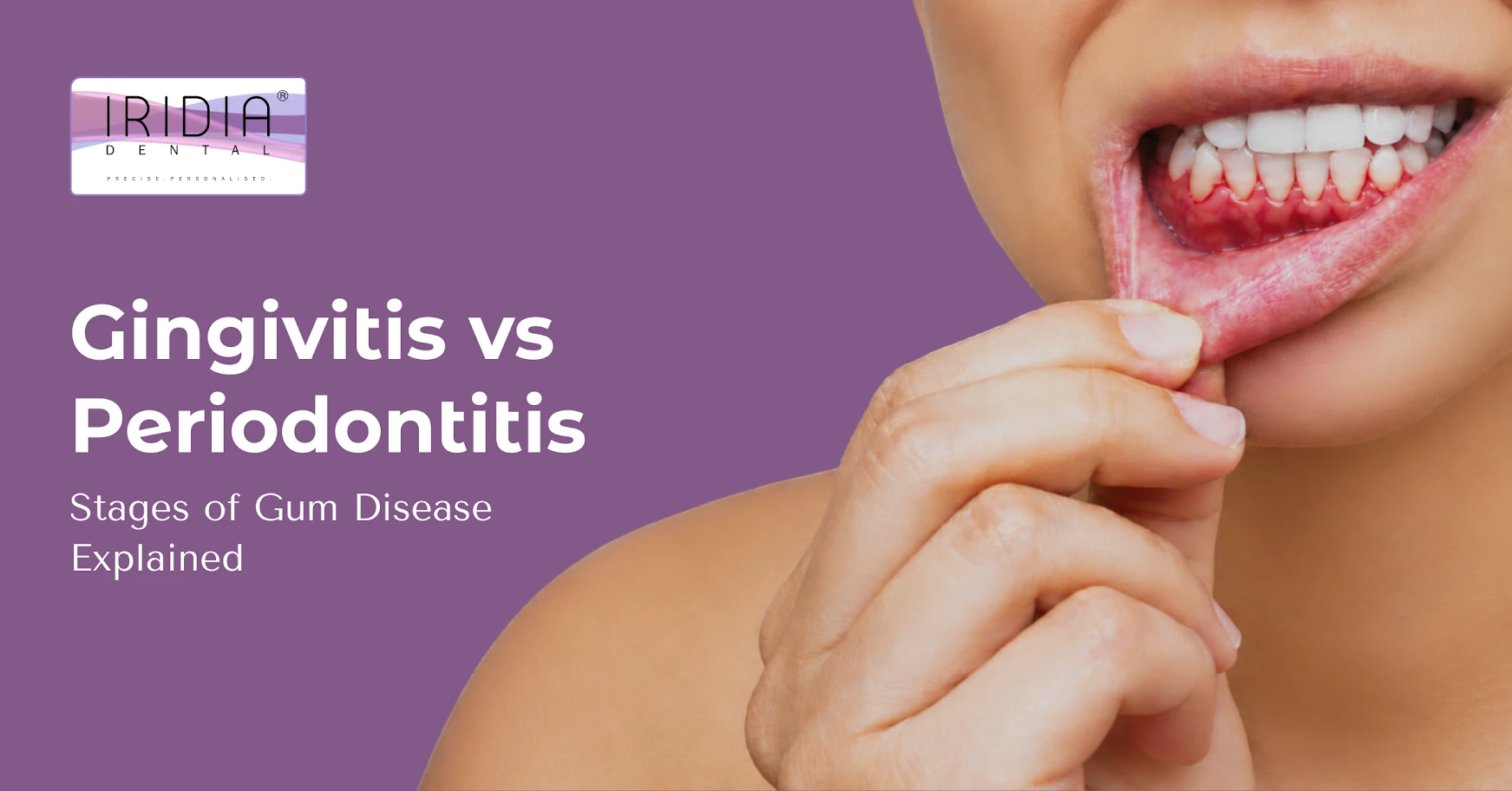
Gingivitis is the first stage of gum disease and the only stage that is fully reversible.
Inflammation is limited to the soft gum tissue only. No bone loss has occurred yet. The problem is that gingivitis is easy to miss. It is often painless, and the symptoms can look like everyday irritation.
Signs of gingivitis include:
- Red, puffy, or swollen gums
- Bleeding when you brush or floss
- Gums that look shiny or feel tender
- Mild bad breath
Consistent brushing, daily flossing, and a professional teeth cleaning from your dentist can help completely reverse gingivitis. It typically clears up within a few weeks of improved oral hygiene.
Stage 2: Early Periodontitis
When gingivitis isn’t treated, the infection starts to spread below the gumline. This is where gum disease stops being reversible.
At this stage, the bacteria release toxins that trigger a chronic immune response in the body. The gums begin to pull slightly away from your teeth. The space created between the tooth and the gum tissue is known as a periodontal pocket. These pockets trap more bacteria, making the situation worse. Bone loss begins here, and unlike gum inflammation, bone loss cannot be undone.
Signs of early periodontitis include:
- Gum pockets measuring around 4mm deep
- Gums starting to pull away from the teeth
- Persistent bad breath
- Bleeding that is more frequent
- Early bone changes visible on X-rays (not noticeable to you at home)
This stage requires professional treatment. Home care alone is no longer enough to control the disease.
Stage 3: Moderate Periodontitis
The infection progresses further. Gum pockets deepen to around 5 to 6mm, and more bone tissue is destroyed.
Your teeth may start to look longer than usual because the gums start receding. Tooth sensitivity becomes more noticeable, especially near the gumline. In some cases, patients also notice a change in how their bite feels.
Signs of moderate periodontitis include:
- Pockets deepening to 5 to 6mm
- Visible gum recession
- Increased tooth sensitivity
- Persistent bad breath that doesn’t improve with brushing
- Gums that appear darker red or purplish
At this point, treatment typically involves a deep cleaning procedure called scaling and root planing, where a dental professional cleans below the gumline to remove built-up tartar and bacteria.
Stage 4: Severe Periodontitis
By Stage 4, significant bone and tissue destruction has occurred. Gum pockets are now 6mm or deeper, and the structural support around your teeth is seriously compromised.
Teeth may start to feel loose or shift position. Chewing can become uncomfortable or even painful. Root surfaces may be exposed, increasing sensitivity dramatically.
Signs of severe periodontitis include:
- Loose or shifting teeth
- Painful chewing
- Gum pockets 6mm or deeper
- Exposed tooth roots
- Significant bone loss visible on X-rays
Severe periodontitis often requires more intensive professional treatment, which may include surgical options depending on how much damage has occurred.
Stage 5: Advanced Periodontitis
Advanced periodontitis is the most severe stage. More than 50% of bone support can be lost. Teeth may become extremely loose, fall out on their own, or require extraction.
Research has linked advanced gum disease to serious systemic health conditions, including heart disease, diabetes complications, and respiratory issues.
Signs of advanced periodontitis include:
- Teeth that are very loose or falling out
- Severe bone loss
- Changes in how the teeth fit together when biting
- Significant pain when eating
At this stage, extensive dental intervention is needed, including extractions, bone grafts, and restorative work.
What Are The Key Differences Between Gingivitis And Periodontitis?
| Gingivitis | Periodontitis | |
| What it affects | Gum tissue only | Gums, bone, and connective tissue |
| Bone loss | No | Yes |
| Reversible | Yes | No, but manageable with treatment |
| Pain | Usually painless | Usually painless until advanced stages |
| First warning sign | Bleeding when brushing or flossing | Bleeding, recession, or loose teeth |
| Treatment needed | Good hygiene and professional teeth cleaning | Professional deep cleaning or surgery |
How Do You Stop Gum Disease From Getting Worse?
Whether you’re dealing with early-stage gum disease or want to make sure you never get there, these habits make the biggest difference:
- Brush twice a day with a soft-bristled toothbrush, angling the bristles toward the gumline at a 45-degree angle
- Floss every single day, as plaque between the teeth is a major driver of gum disease.
- Use an antibacterial mouthwash as part of your daily routine.
- Visit your dentist every 6 months for a professional teeth cleaning and check-up.
- Quitting smoking is the single change that can dramatically slow disease progression.
- Manage any underlying health conditions, especially diabetes and hypertension
If you’ve already been diagnosed with any stage of gum disease, regular periodontal maintenance visits are essential. Your dentist or periodontist will monitor pocket depth, bone levels, and gum tissue to make sure things stay stable.
Frequently Asked Questions
Gingivitis is the early stage of gum disease where only the gum tissue is inflamed, with no bone loss. Periodontal disease (periodontitis) is the advanced stage where the infection has spread deeper, causing permanent damage to the bone and tissue supporting your teeth.
Clinically, gingivitis shows shallow gum pockets (under 4mm), no bone loss, and reversible inflammation. Periodontitis is diagnosed when pockets deepen beyond 4mm and X-rays confirm bone loss around the teeth.
Gingivitis itself doesn’t typically cause recession, but if it progresses to periodontitis, the gums can begin pulling away from the teeth as bone loss occurs. Aggressive brushing with inflamed gums can also contribute to early recession.
Gingivitis is treated with a professional dental clean combined with improved daily brushing and flossing at home. Periodontitis requires deeper treatment, such as scaling and root planing, and in more advanced cases, surgical intervention.
No, periodontitis is not reversible because the bone and tissue loss it causes cannot naturally regenerate on their own. However, with the right professional treatment it can be controlled and stabilised to prevent further damage.